|
 |
|
|
|||||||||||
|
stations and the postal authority are all situated in Bur Dubai, it
ranks as the UAE's most important port and commercial centre.
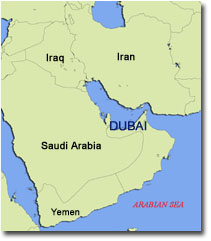
The major part of the Dubai emirate consists of rolling sand dunes lapping the foothills of the arid Hajar mountains in the east. Dubai city is built along the edge of a narrow 10-kilometre long, winding creek which divides the southern section of Bur Dubai, the city's traditional heart, from the northern area of Deira. |
||||||||||||
 |
Population | |||||||||||
The population of the U.A.E. is around 3,488,000 in 2001, and Dubai's population is approximately 1,029,00. Only 22% of the emirate’s population, at the last count, were actually ethnically emirate in a population mixture that has to be one of the world’s most cosmopolitan. There are large groups of Indians, Pakistanis, Iranians and Southeast Asians. The sex ratio of Dubai’s male to female is 1.46 to 1. The literacy
rate in Dubai is around 80%. |
||||||||||||
|
Language | |||||||||||
| The
official language is Arabic. English, Urdu and Hindi are widely spoken and understood. Arabic and English are the official business languages. |
||||||||||||
|
Currency | |||||||||||
| The official currency is Emirati dirham (AED). | ||||||||||||
|
Economy | |||||||||||
|
The UAE has an open economy with a high per capita income and a sizable annual trade surplus. Its wealth is based on oil and gas output (about 38% of GDP), and the fortunes of the economy fluctuate with the prices of those commodities. Petroleum production is centred in Abu Dhabi and Dubai. Industrial development is essentially petroleum related and is limited by a lack of trained personnel and raw materials. The non-oil sector of the economy currently contributes some 80% of the total produced domestic products of Dubai and is continuing to expand in importance. This long trading tradition earned Dubai the reputation within the Middle East as the “City of Merchants” remains an important consideration for foreign companies looking at opportunities in the region today. Despite a relatively small population, Dubai's total imports in 1994 exceeded $14 billion. It is not only because Dubai is the major re-export centre for the region, but also due to Dubai's rapidly developing role as a supplier to such emerging markets as India, the CIS, Central Asia and South Africa. |
||||||||||||
|
Government | |||||||||||
|
The Federal
Supreme Council (FSC) of the UAE, comprising the hereditary sheikhs
-- also known as emirs, and hence the area ruled by an emir is known
as an emirate -- who control the seven traditional sheikhdoms (Abu
Dhabi, Dubai, Sharjah, Ajman, Umm al-Qaiwain, Ras al-Khaimah and Fujairah
-- each emirate is named after its principal town) and choose president
and vice president from among themselves for five-year term. Since
1971, the ruler of Abu Dhabi, Sheikh Zaid bin Sultan al-Nahayan, has
been president. A parliament known as the Federal National Council (FNC) was established on 13th February 1972 and is considered a landmark in the country's constitutional and legislative process. The FNC advises the Cabinet and the Supreme Council but cannot overrule them. According to the constitution, the FNC consists of 40 members who are drawn proportionately from each of the seven emirates. Each ruler appoints the members for his emirate. There are no elections or legal political parties in the UAE. While Abu Dhabi is the centre of federal government activities, most ministerial departments also maintain offices in Dubai. |
||||||||||||
|
Law and Taxation | |||||||||||
|
Federal
court system introduced in 1971; all emirates except Dubayy (Dubai)
and Ra's al Khaymah are not fully integrated into the federal system;
all emirates have secular and Islamic law for civil, criminal, and
high courts. Dubai has civil, criminal and Shariah (Islamic) Courts of first instance. All court decisions may be brought to the Dubai Court of Appeal. Thereafter, a final appeal may be made to the Dubai Court of Cassation. For the Union Supreme Court, judges are appointed by the president. The Civil Court (as opposed to the Shariah court) has jurisdiction over labour, civil and commercial transactions, as well as personal matters (e.g. wills, divorces etc) relating to non-Muslims. The language of the Courts is Arabic and advocates admitted to plead are Arab nationals. The principle corporate legislations is Jebel Ali Free Zone Offshore Companies Regulations 2003. According to the regulation, there is no corporate tax in Dubai. The only exceptions to this are for oil producing companies and branches of foreign banks. Likewise, there are no personal taxes. Direct taxation is against the traditions of the UAE and it is highly unlikely that it will be introduced in the near future. |
||||||||||||
|
Local Infrastructure | |||||||||||
|
Dubai is
served by more than 170 shipping lines and more than 86 airlines offering
links to over 100 cities worldwide. The strong shipping and transportation
sector is composed of most of the leading regional and international
freight forwarders, insurers and shipping agents. The postal system in the UAE is very modern and the post offices are among the most efficient in the Gulf. Between the UAE and Europe or the USA, mail takes about ten days. To Australia, mail takes about eight to ten days. There is an excellent telephone system and you can phone anywhere in the world from the most remote areas. Throughout the country there are telephone offices which are equipped to send and receive fax, telex and telegraph messages. Dubai has a rapidly developing high quality manufacturing sector and a buoyant and prosperous domestic market. In a nutshell its infrastructure and services match the highest international standards. |
||||||||||||
|
Advantages | |||||||||||
| -
Free enterprise system. - Highly developed transport infrastructure. - State-of-the-art telecommunications. - Sophisticated financial and services sector. - Top international exhibition and conference venue. - High quality office and residential accommodation. - Reliable power, utilities etc. - First class hotels, hospitals, schools, shops etc. - Cosmopolitan lifestyle. - No corporate taxes and income taxes. - No foreign exchange controls. - No trade barriers. - Competitive import duties (4% with many exemptions), labour costs, energy costs, real estate costs. |
||||||||||||
 |
||||||||||||
 |
||||||||||||