|
 |
|
|
|||||||||||
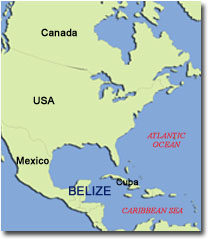
| There is a low coastal plain, and much of it is covered with mangrove swamp. The land rises gradually towards the interior and a large part of the mainland is made up of forest. | ||||||||||||
 |
Population | |||||||||||
The total population of Belize is around 300,000, with 60,000 live in Belize City. Belize is a multi-racial make-up country, which is due to the influx of residents from Central America, Asia, Europe and the Caribbean. The main ethnic groups including Mestizo, Creole, Ketchi, Yucatec and Mopan Mayas, Garifuna and East Indian maintain a large percent of Belize's population. Other ethnic groups like German and Dutch Mennonites, Chinese, Arabs and Africans account for a small percentage of the population. There is a nearly balanced sex ratio as males only outnumber the female population by 1%. The literacy rate in Belize is around 94%. |
||||||||||||
|
Language | |||||||||||
| The
official and spoken language is English. Spanish
is also common and is taught in primary and secondary schools in
order to further develop bi-lingualism. |
||||||||||||
|
Currency | |||||||||||
| The official currency is Belizean Dollar (BZD). | ||||||||||||
|
Economy | |||||||||||
|
Belize has an open economy, and its principal sectors are agriculture, agro-products like sugar, citrus, banana, etc., and tourism. Belize's exports of goods and services represented approximately 55% of GDP, while another 20% is accounted from tourism. An abundance of nature resources, like land, forest and water supply, Belize’s proximity to U.S. market and historically close related to U.K. are the competitive advantages of Belizean economy. |
||||||||||||
|
Government | |||||||||||
|
Belize became a British Crown Colony in 1862 and achieved independence
in 1981. It is now a member of the British Commonwealth, the United
Nations the Non-Aligned Movement, the Organization of American States,
the newly-formed Association of Caribbean States, Caribbean Community
(CARICOM) and related institutions. The Government is operated on the principles of Parliamentary Democracy based on the Westminster System, which is a sovereign, democratic state. It consists of a cabinet which is leaded by a Prime Master, while a 29-member elected House of Representatives and a nine-member appointed Senate form a bi-cameral legislature. General elections are held at intervals of not longer than five years. There are two main political parties; The People's United Party (PUP) and United Democratic Party (UDP). Both parties are committed to the economic development of the country and the encouragement of overseas investment. |
||||||||||||
|
Law and Taxation | |||||||||||
|
The legal system is based on the English Common Law. The chief justice of the Supreme Court is appointed by the governor general on the advice of the prime minister. The principal corporate legislations are International Business Companies Act, 2000, and Limited Life Companies Act, 1999. |
||||||||||||
|
Local Infrastructure | |||||||||||
|
The four main highways and regular bus services form a close communication
network within the country. The inland waterway system composed of several rivers and lagoons are navigable by shallow draught vessels. The Belize river was once used for logging. The stated owned international air port is situated 10 miles from Belize City, and maintains flights to and from United States of America, Central America and Mexico. The main port in Belize City is capable of handling containerized shipping. Nine major shipping lines move cargo to and from Belize to Central and North America, Europe and Japan. |
||||||||||||
|
Advantages | |||||||||||
| -
Independent country with political and economic stability. - Sound banking and monetary policies. - Modern democratic legislative government. - Professional support for establishing and operating a company. - Totally offshore tax exempt environment. - No tax treaties with any countries. - Strong tradition and laws protecting client privacy. - Easy access by air, land and sea. - Proximity to the United Sates. - Excellent professional and banking service. - Good infrastructure and communications. - Friendly English-speaking population. - Vast untapped resources. |
||||||||||||
 |
||||||||||||
 |
||||||||||||